Skip to content
  • Home
  • About
  • Blog
  • Shop
  • Home
  • About
  • Blog
  • Shop
Instruction and Interventions

Unlock the Power of the Six Syllable Types in Your Classroom and Master Multisyllabic Words

Unlock the Power of the Six Syllable Types in Your Classroom and Master Multisyllabic Words

Do your students struggle when it comes to understanding and decoding multisyllabic words? I have an exciting solution that will transform your student’s reading skills. Explicitly teaching students about syllable types and using that knowledge to break apart large words into smaller parts is crucial because it enhances their ability to decode and understand complex vocabulary.

By focusing on the six essential syllable types, we can make a significant impact in our classrooms. I’ve got you covered with some amazing print-and-go lessons that will simplify your teaching process. Let’s dig deep into the nine essential steps to scaffold students learning and explicitly teach them about the six syllable types.

Essential Steps for Teaching Syllable Types

Step 1: Warm Up

Why is it important?
Reviewing the sounds before the lesson helps activate prior knowledge and solidify orthographic mapping which is the mental process that we use to permanently store words for immediate retrieval and become fluent readers.

What does it look like?
We kick off our syllable-type lessons with a warm-up activity. There are two sets of warm-ups to choose from: a sound card warm-up and a sounds-only warm-up. These warm-ups consist of sound cards with power bars indicating the commonness of each spelling for the corresponding sound.

Do your students struggle with understanding and decoding multisyllabic words? Teach them about the six syllable types and discover the effective strategies to break down complex words into smaller, manageable parts and empower your students with the skills they need to conquer multisyllabic words in this comprehensive lesson breakdown.

During the warm-up, students say the name, sound, and keyword associated with each sound card. You can print the warm-up cards or display them on a smart board for students to read chorally or individually.

As an optional warm-up, I recommend incorporating phonemic awareness activities from “Equipped for Reading Success” by David Kilpatrick to further enhance reading skills.

Step 2: Sound Review

Why is it important?
Similar to the warm-up, explicit instruction of sound-symbol relationships is crucial for reading and spelling proficiency. The power bars help students understand the commonness of each spelling.

What does it look like?
In this step, we review the targeted sounds for each syllable type. Encourage students to say the name, sound, and keyword associated with each sound. Additionally, discuss the power bars and engage in conversations about noticeable patterns.
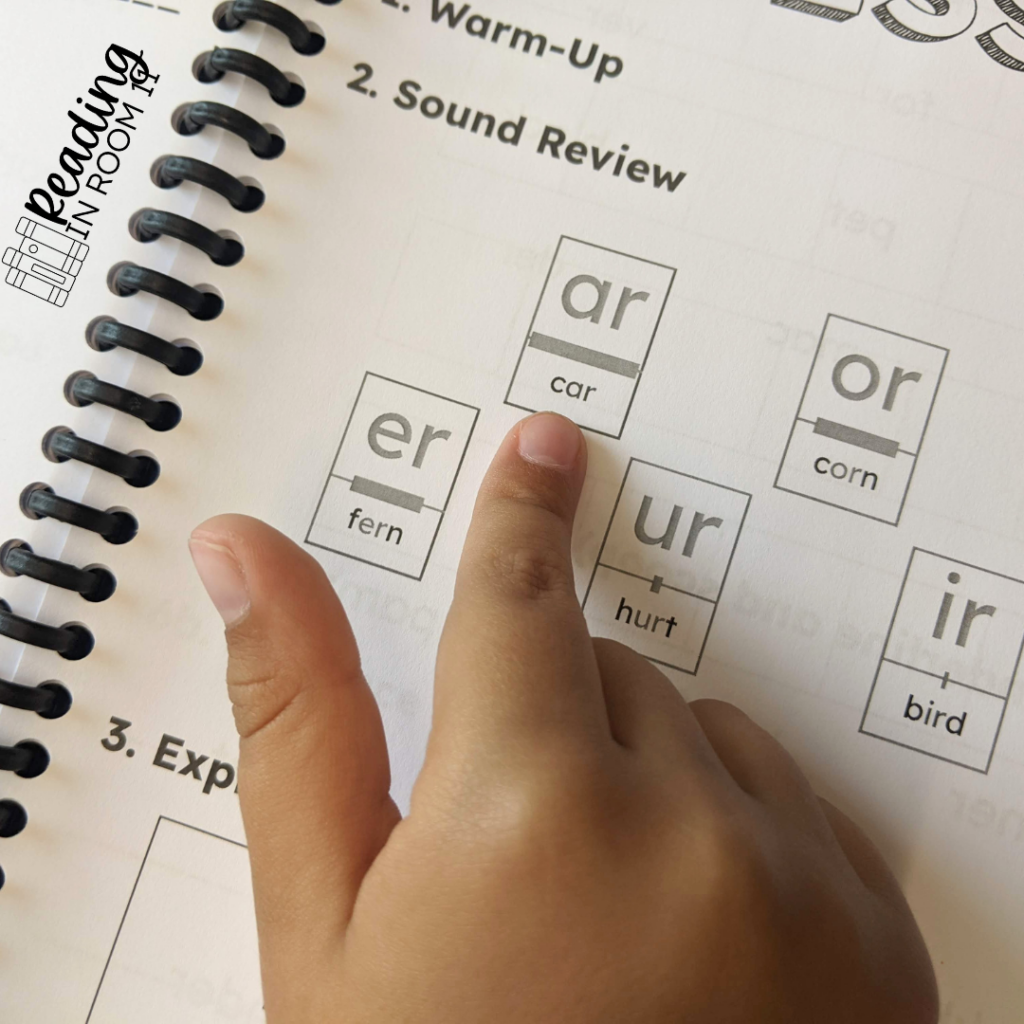
Do your students struggle with understanding and decoding multisyllabic words? Teach them about the six syllable types and discover the effective strategies to break down complex words into smaller, manageable parts and empower your students with the skills they need to conquer multisyllabic words in this comprehensive lesson breakdown.

Step 3: Chaining

Why is it important?
Phoneme manipulation is the pinnacle of phonemic awareness, and students use this skill to identify and write sounds correctly. It helps students understand how sounds create words.

What does it look like?
Chaining involves building a sequence of words by manipulating one sound at a time. Word lists are provided, and referring to the letters as sounds rather than letters themselves is essential.

Do your students struggle with understanding and decoding multisyllabic words? Teach them about the six syllable types and discover the effective strategies to break down complex words into smaller, manageable parts and empower your students with the skills they need to conquer multisyllabic words in this comprehensive lesson breakdown.

You can utilize various materials for chaining, such as magnetic letters or whiteboards with dry-erase markers. The key is to ensure students change only one sound at a time, promoting focused learning.

Step 4: Explicit Instruction

Why is it important?
Explicitly teaching students how to read multisyllabic words is crucial. Underlining and scooping provide them with a strategy to break down complex words into smaller, decodable parts.

What does it look like?
In this step, we teach the strategy of “underlining and scooping.” Students learn to underline the vowel sounds and “scoop” word parts based on the number of vowel sounds.

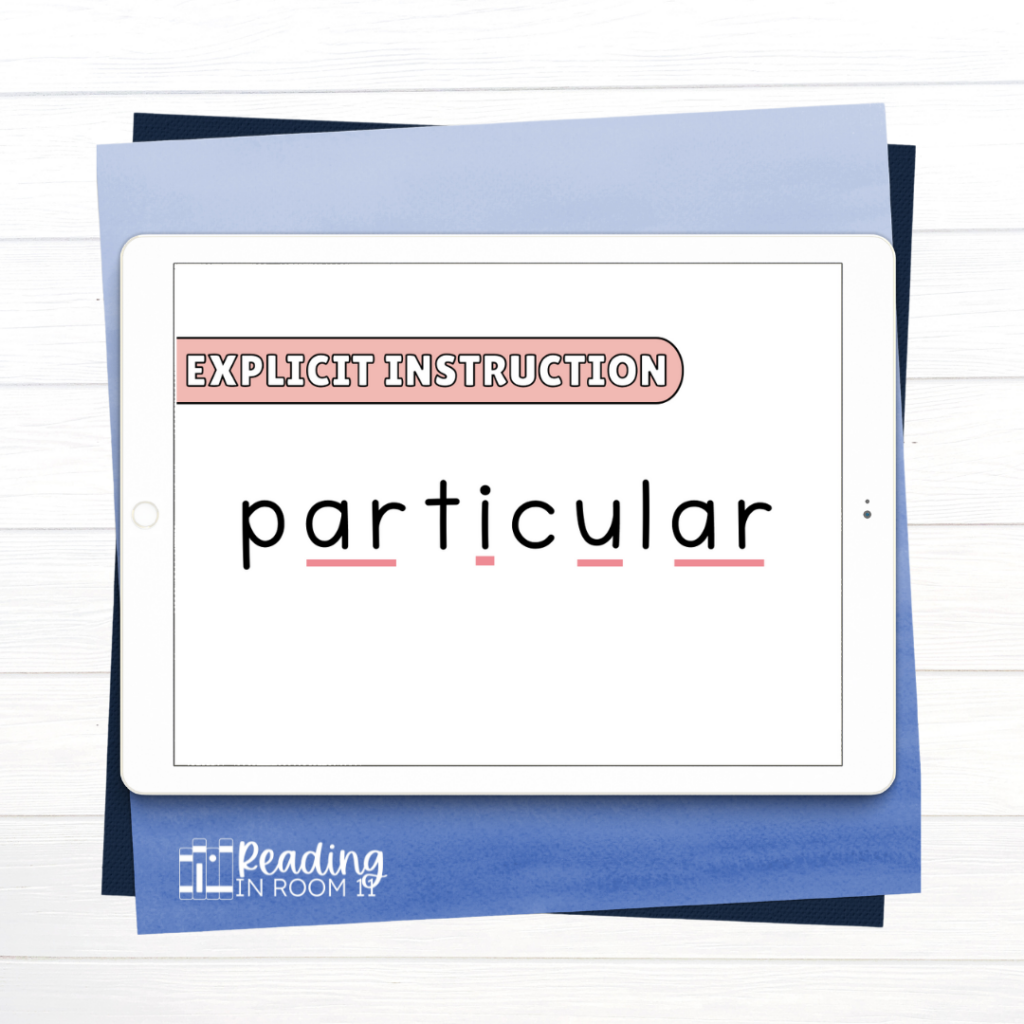
Do your students struggle with understanding and decoding multisyllabic words? Teach them about the six syllable types and discover the effective strategies to break down complex words into smaller, manageable parts and empower your students with the skills they need to conquer multisyllabic words in this comprehensive lesson breakdown.

Accompanying Google Slides and a PDF guide students through explicit instruction. Each slide/page showcases a word, and students are encouraged to underline the vowel sounds, create scoops, and review the word together. This is an opportunity to discuss different syllable types within the word as well.

Step 5: Word Parts

Why is it important?
This activity builds decoding automaticity and strengthens students’ understanding and application of syllable types in word parts.

What does it look like?
The word parts activity helps students break apart multisyllabic words. Each word part can be found in the “Word Reading ” section.
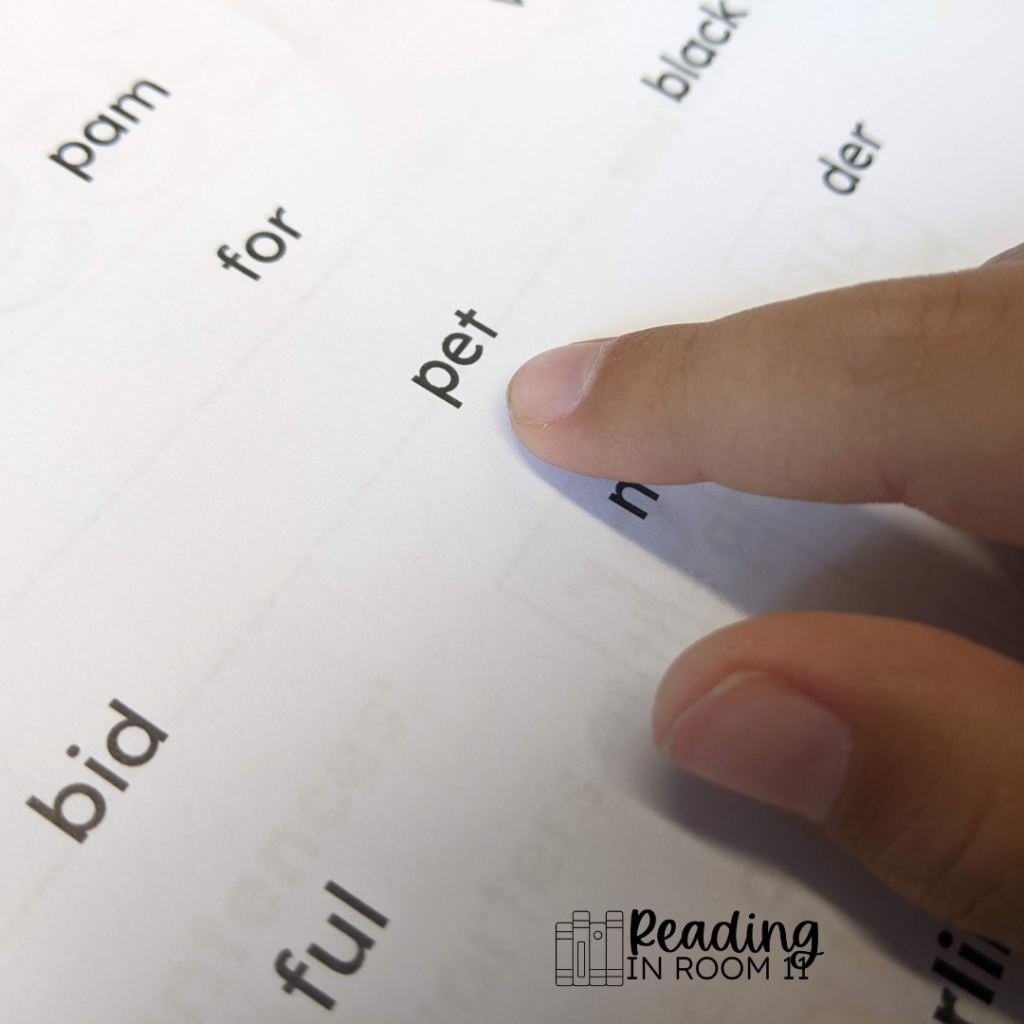
Do your students struggle with understanding and decoding multisyllabic words? Teach them about the six syllable types and discover the effective strategies to break down complex words into smaller, manageable parts and empower your students with the skills they need to conquer multisyllabic words in this comprehensive lesson breakdown.

During this activity, students whisper read the word parts, providing individual or group work opportunities. You can assign rows or columns for students to focus on, encouraging them to share their findings and discuss word patterns.

Step 6: Word Reading

Why is it important?
Word reading enables students to independently apply their decoding strategies. Regular practice with multisyllabic words enhances decoding accuracy, efficiency, and fluency.

What does it look like?
In this section, students apply the phonetic patterns of syllable types and practice using the “underline and scoop” strategy.

Do your students struggle with understanding and decoding multisyllabic words? Teach them about the six syllable types and discover the effective strategies to break down complex words into smaller, manageable parts and empower your students with the skills they need to conquer multisyllabic words in this comprehensive lesson breakdown.

You know your students best, so adjust the level of support they need. Consider using the gradual release method, where you initially work through a row or lesson together, followed by independent work. Providing specific feedback and discussing word patterns is essential during this activity.

Step 7: Dictation

Why is it important?
Encoding (spelling) is the process of breaking a spoken word into its individual sounds. Spelling and reading rely on the same mental representation of a word, which enhances fluency and reading success.

What does it look like?
Dictation reinforces spelling skills within specific syllable types. Sound boxes are provided to represent each sound in the word.

Do your students struggle with understanding and decoding multisyllabic words? Teach them about the six syllable types and discover the effective strategies to break down complex words into smaller, manageable parts and empower your students with the skills they need to conquer multisyllabic words in this comprehensive lesson breakdown.

Start by saying the word, have students repeat it, and segment the sounds. Then, students use the sound boxes to write the word, ensuring each sound is placed in the appropriate box. Encourage sentence writing as well, either by using words from the word reading section or providing dictated sentences.

Step 8: Phrases

Why is it important?
Phrases and sentences provide scaffolded opportunities for students to read target words in context, building decoding automaticity and reading fluency.

What does it look like?
Phrases and sentences containing target words from the word reading section are utilized to further enhance reading skills.

Do your students struggle with understanding and decoding multisyllabic words? Teach them about the six syllable types and discover the effective strategies to break down complex words into smaller, manageable parts and empower your students with the skills they need to conquer multisyllabic words in this comprehensive lesson breakdown.

During this step, students whisper-read phrases and sentences. Vary the starting points to ensure individual engagement. You can listen to students, encourage choral reading, or assign rows/columns for focused practice.

Step 9: Reading in Context

Why is it important?
Reading and rereading a text helps students build fluency and assess their independent application of the skills learned throughout the lesson.

What does it look like?
Reading in context allows students to apply their decoding strategies to longer texts containing multisyllabic words. This step is crucial for developing their reading fluency and comprehension skills.

This section is intentionally left blank to allow for differentiation based on your students’ needs. Choose decodable or content-related passages to incorporate reading strategies and build background knowledge.
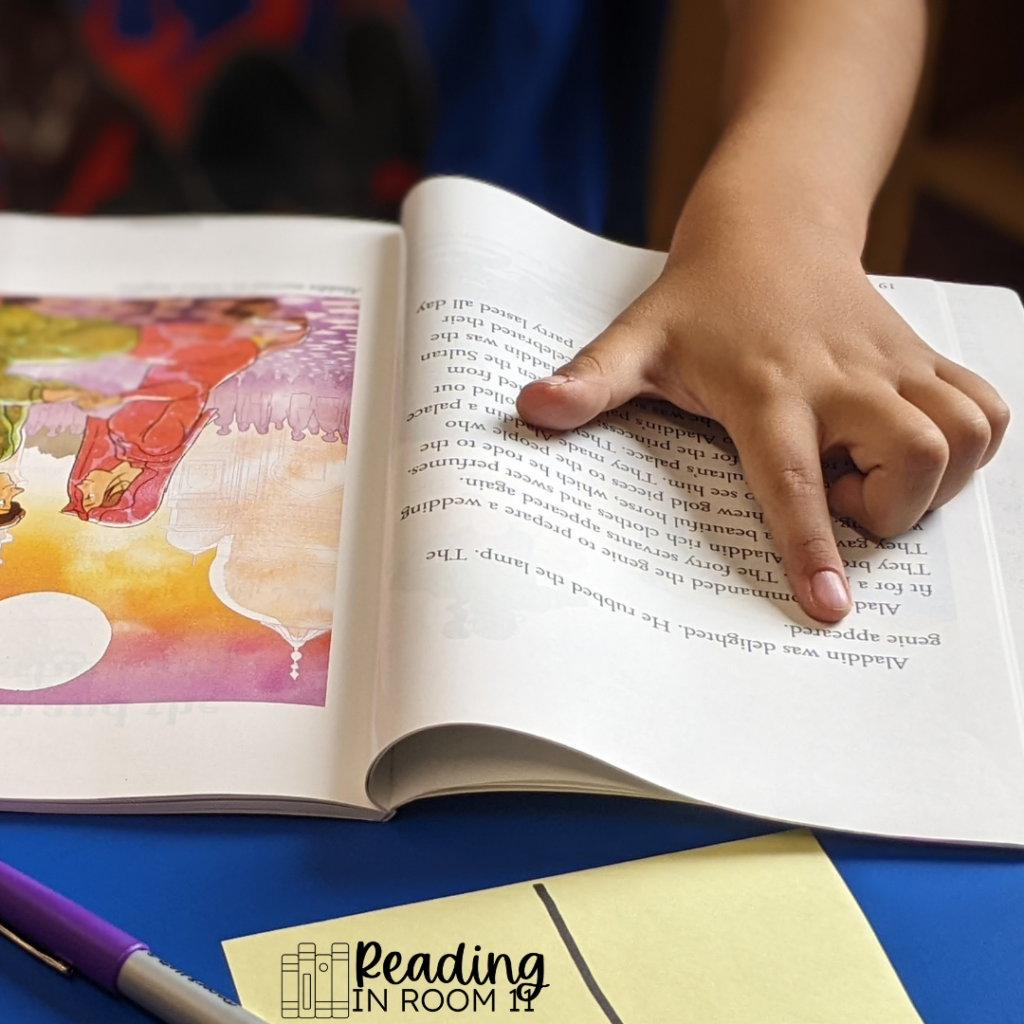
Do your students struggle with understanding and decoding multisyllabic words? Teach them about the six syllable types and discover the effective strategies to break down complex words into smaller, manageable parts and empower your students with the skills they need to conquer multisyllabic words in this comprehensive lesson breakdown.

To make it even easier for you, I have compiled a list of resources where you can find free decodable and content-related passages. You don’t have to spend time searching for materials yourself. Choose from the provided options and incorporate them into your lessons, enabling your students to practice their decoding strategies while building essential background knowledge.

You Know Your Students Best

You may be reading this and think, wow, that’s a bit much. You know your students best! And that’s the beauty of teaching: the flexibility to adapt lessons according to your student’s needs. Feel free to modify the syllable-type lessons as you see fit, whether it means dedicating more time to a particular section that your students find challenging or skipping a lesson that may not be as relevant to their current skill level. Remember, teaching is an art, and you have the creative freedom to tailor the lessons to suit your classroom dynamics. Trust your instincts and make adjustments that you see fit.

Check Out a Free Sample

Click here to preview a full lesson before you commit!

Do your students struggle with understanding and decoding multisyllabic words? Teach them about the six syllable types and discover the effective strategies to break down complex words into smaller, manageable parts and empower your students with the skills they need to conquer multisyllabic words in this comprehensive lesson breakdown.

Grab Your Syllable Type Lessons:

Do your students struggle with understanding and decoding multisyllabic words? Teach them about the six syllable types and discover the effective strategies to break down complex words into smaller, manageable parts and empower your students with the skills they need to conquer multisyllabic words in this comprehensive lesson breakdown.

Final Thoughts

By incorporating these engaging activities into your lessons, you’ll witness your students’ decoding skills soar to new heights. Remember, I’ve created premade syllable-type lessons to support you on this incredible journey. Let’s empower our students with the tools they need to become confident readers and spellers. Happy teaching!

Pin for Later:
Do your students struggle with understanding and decoding multisyllabic words? Teach them about the six syllable types and discover the effective strategies to break down complex words into smaller, manageable parts and empower your students with the skills they need to conquer multisyllabic words in this comprehensive lesson breakdown.
SHARE THIS
phonicssyllable types
About Jenn

About Jenn

Hi! I'm Jenn and I'm here to help teachers who want to deliver systematic, explicit reading instruction/interventions by sharing what I've learned about the Science of Reading and the resources I use daily with my students.

Related Posts

Phonemic Awareness Interventions: The Key to Decoding Greatness
Anecdotal Notes For Reading Groups: From Observation to Transformation
Sound Spellings: A Powerful Tool for Teaching Reading
Decodable Text: The Key to Boosting Reading Skills

Post navigation

Word Chains: The Power of Manipulating Sounds to Boost Reading Proficiency
Classroom Rewards: How to Boost Motivation
About Me

About Me

Hi! I'm Jenn and I’m a K-4 Reading Specialist here to help teachers who want to deliver systematic, explicit reading instruction and interventions by sharing what I’ve learned about the Science of Reading and the resources I use daily with my students.

FREEBIES

ckla-flashcard-freebie
unlock-the-power-of-punchcards-with-free-go-noodle-punch-cards-1
free ckla code charts
a guide to finding free decodable text
CKLA-Sound-Cards-1
previous arrow
next arrow

Subscribe

and get tips and tricks on reading instruction and intervention sent straight to your inbox!

Teachers LOVE:

empowering teachers. transforming students (3)
ckla intervention lessons
empowering teachers. transforming students (2)
Guess my word (1)
empowering teachers. transforming students (1)
empowering teachers. transforming students
previous arrow
next arrow

SHOP NOW

LEARN ABOUT

CKLA engagement freebie game management organization phonemic awareness phonics phonological awareness syllable types tech tip

  • Home
  • About
  • Blog
  • Shop
Copyright © 2026 | All Rights Reserved | Designed by Little Theme Shop