
Thank you so much for downloading the 2nd Grade CKLA Intervention Lessons. Here is the teacher guide with a step-by-step guide, videos, and an explanation of each section’s importance and how they build on one another.
The video walkthroughs are the same as the text – choose one based on your preference! Please note that I am using the “Bedtime Tales” lessons as an example, but the format is the same for all units.
The table of contents is clickable! Just click a section to jump ahead.
TABLE OF CONTENTS
IMPORTANCE OF INTERVENTION LESSONS
- Intervention lessons provide explicit and systematic phonics instruction
- Lessons follow a systematic and sequential framework that reinforces letter-sound relationship
- Lessons are scaffolded, where each lesson builds upon the other working up to the final task of reading a passage and answering a comprehension question.
- Students have an opportunity to practice decoding skills and build fluency in controlled text patterns
WHAT’S INCLUDED
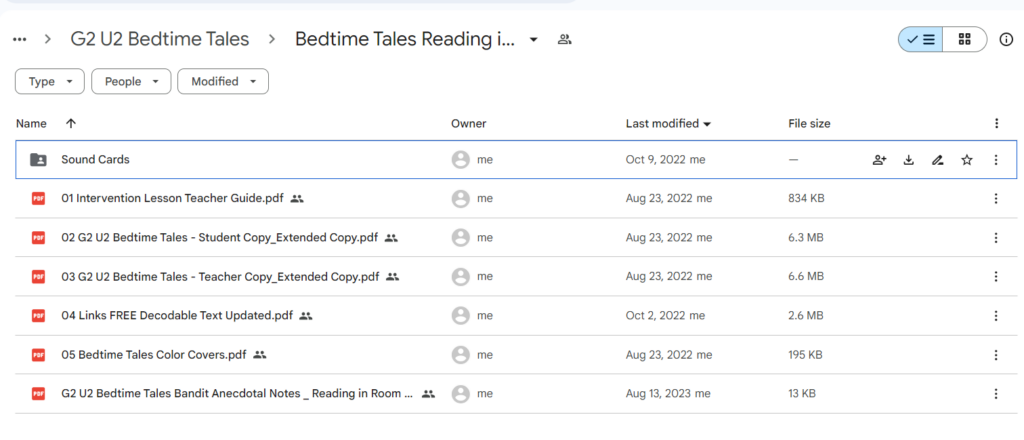
This is a screenshot of what you have access to after downloading.
You will find:
- folder of sound cards
- teachers guide
- student/teacher copy
- optional color covers
- anecdotal notes
- free decodable text resources
IMPORTANT TEACHER TIP
For each section, I never have students do a cold read-aloud or practice reading in their head – we always start with by whisper reading. This means that they are using a whisper voice to practice reading so that I can hear them.
I take turns listening to students whisper read and provide feedback as needed. It is important to set the expectation that if a student has read all the sounds, words, phrases, or passages they go back and REREAD! This is great fluency practice and also keeps students on task while you are listening to other students.
After listening to students whisper read, I pick one of the following activities:
- students read chorally
- students take turns reading the sounds
- assign students a row to read aloud
- assign students a column
- one of the above options combined with Teacher vs Student
SOUND CARDS
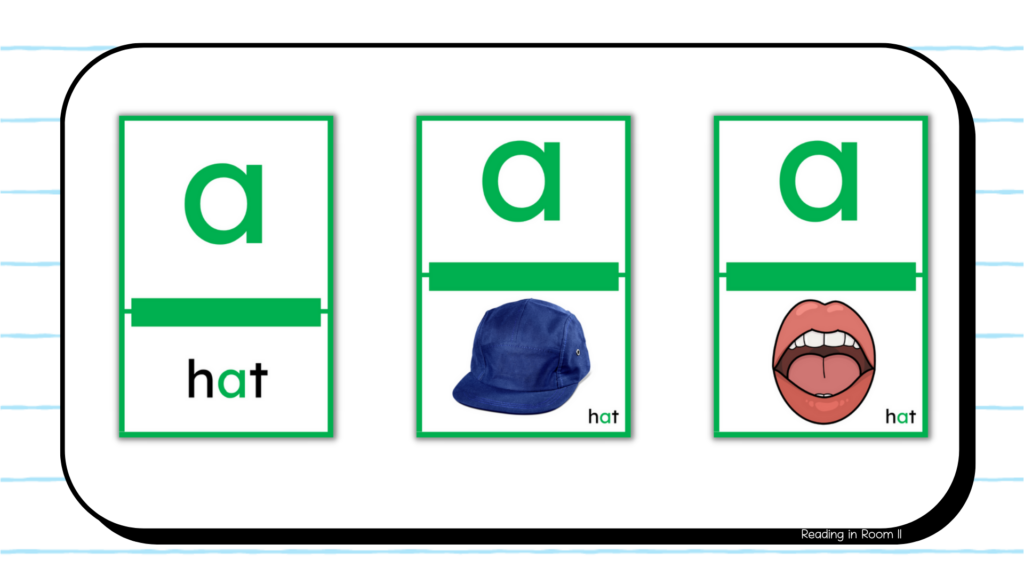
Sound cards are an add-on that can be printed, cut out, and used for a bulletin board of flashcards.
Why It’s Important
- Sound cards are essential tools in literacy instruction because they provide visual representations of phonetic sounds.
- This helps students understand the relationship between letters and sounds, particularly through the indication of the frequency and primary spelling of each sound.
- Understanding the frequency of sound spellings helps students build their decoding skills.
Teacher Tips
- There are two sets of sound cards included in the Google Drive Folder – a set of PDFs and a set of PNGs. With the PDFs, you can just print and go! The PNGs are available so you can choose your size to print them. Printing instructions are included.
- Each sound card has three versions: power bar only, visual cue, and articulation prompt.
- The power bar indicates how common this spelling is for the sound it represents.
- A long power bar that stretches almost across the card means that this is the main spelling for the sound and there are very few words that have this sound spelled any other way.
Video Walkthrough
SOUND REVIEW
Why It’s Important
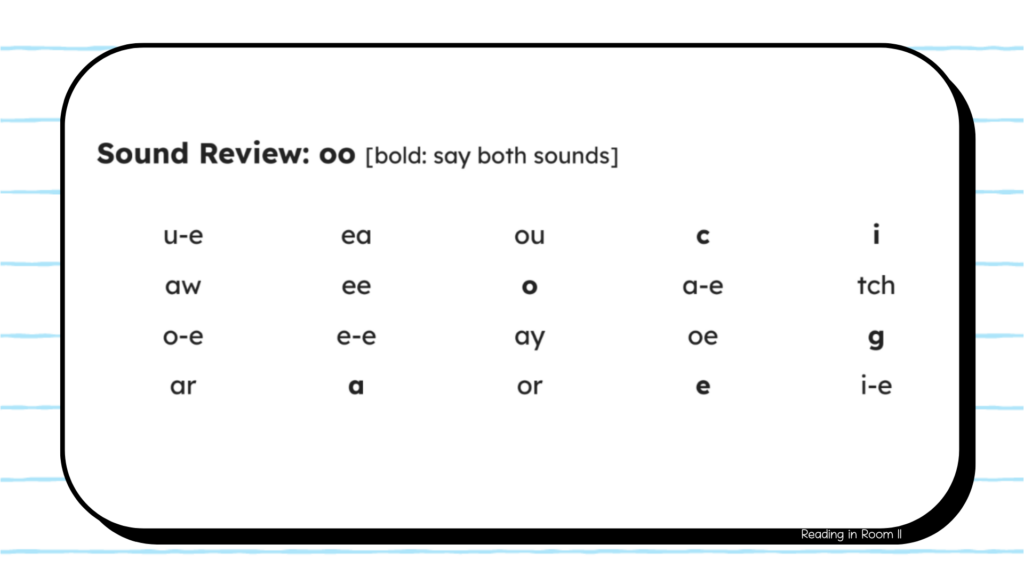
- Every lesson starts with a sound review.
- These sounds are either new to students or are a review of previously learned sounds.
- This is a great warm-up to activate students’ sound-symbol knowledge and is a foundational skill for word reading.
Teacher Tips
- Some sounds in this section are in bold.
- This means that the sound has multiple spellings so students should say them both. For example, the sound /c/ typically says /k/ but is can also say /s/.
- Follow whisper reading procedures
Video Walkthrough
WORD LADDERS
Why It’s Important
- Word chains or ladders offer a scaffolded approach to building words
- Each chain or rung on the ladder focuses on manipulating sounds one step at a time.
- This sequential process allows students to grasp phonetic patterns more effectively, leading to improved decoding skills.
Teacher Tips
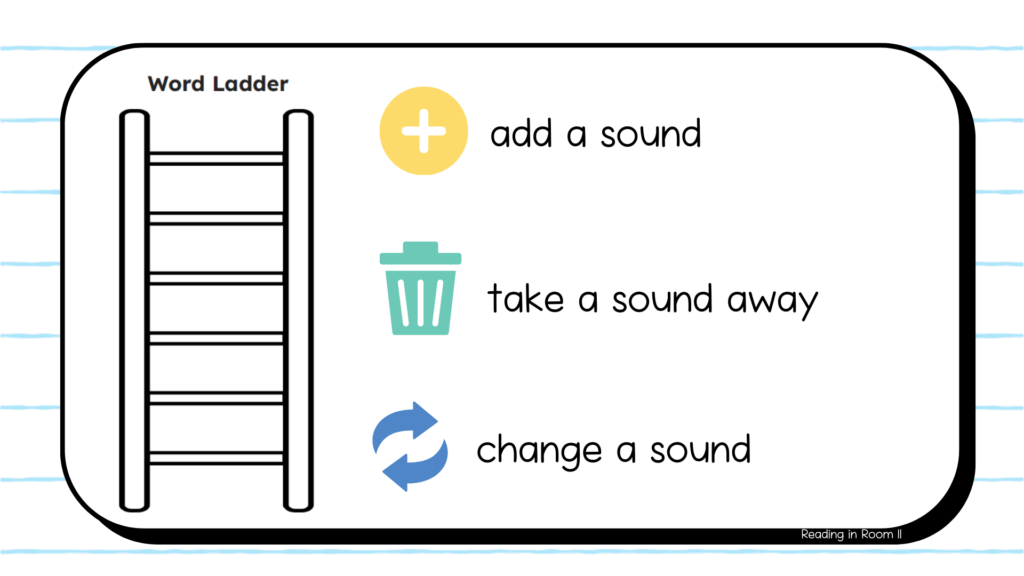
- In this activity, students change one sound at a time.
- It is important to refer to these as sounds and not letters
- There are three main ways to change a word:
- add a sound
- take a sound away
- change a sound
- Sometimes I have my students do this with whiteboards and dry-erase markers.
Video Walkthrough
ONE-SYLLABLE WORDS
Why It’s Important
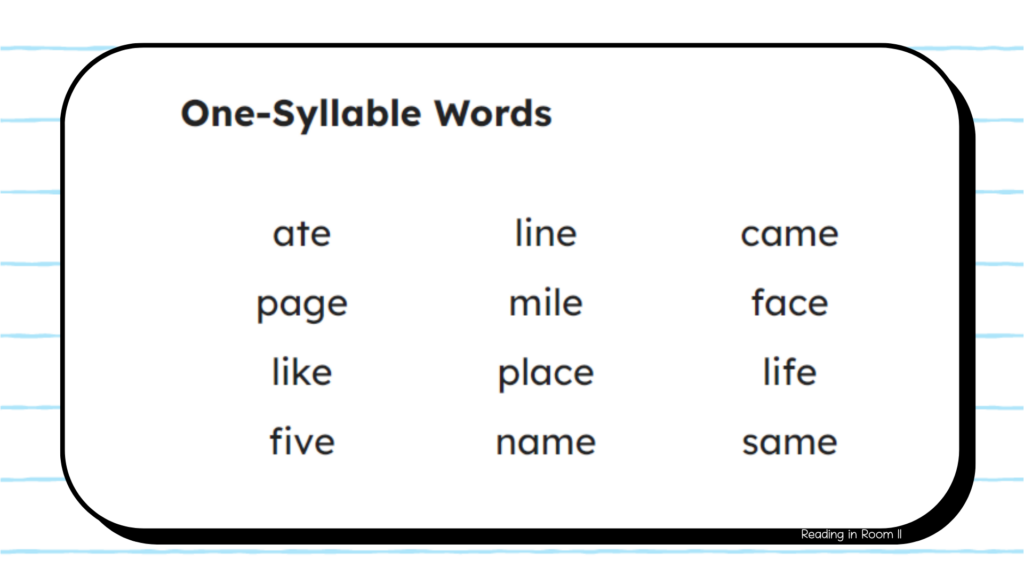
- In this section, students engage in reading phonetically regular words that follow the phonetic patterns introduced in previous lessons.
- This practice reinforces decoding skills and promotes automaticity, word attack/decoding skills, and fluency in reading.
Teacher Tips
- We start with one-syllable words. they always follow the sound-spelling pattern introduced at the beginning of the lesson
- Follow whisper reading procedures
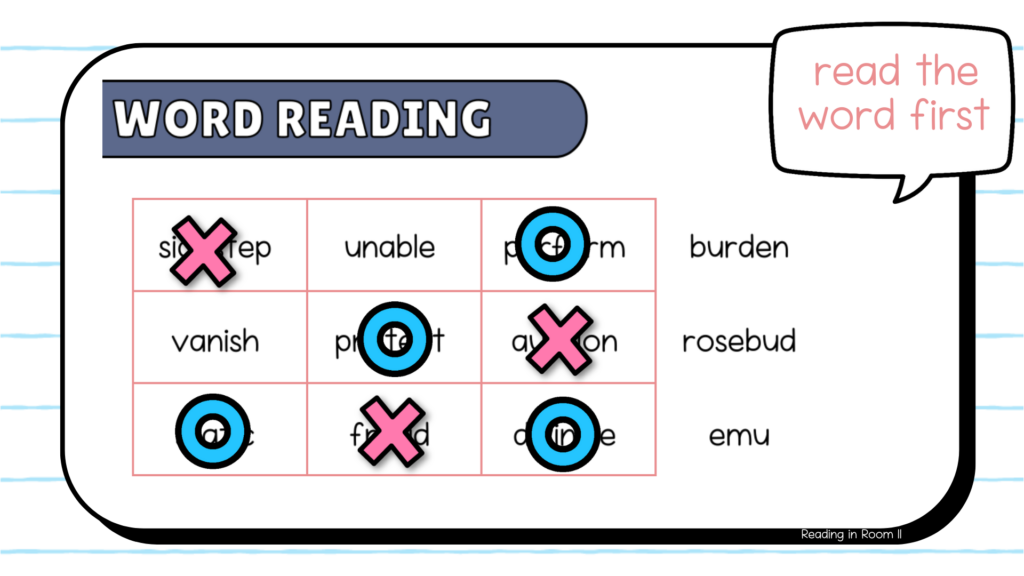
- To make rereading the list more fun, we often turn the word grid into a tic-tac-toe board.
- Most importantly, the student needs to correctly read the word before students can place an x or an o
- Students are instructed to kindly prompt their partner if they read the word incorrectly by saying “try agian.”
Video Walkthrough
MULTISYLLABIC WORDS
Why It’s Important
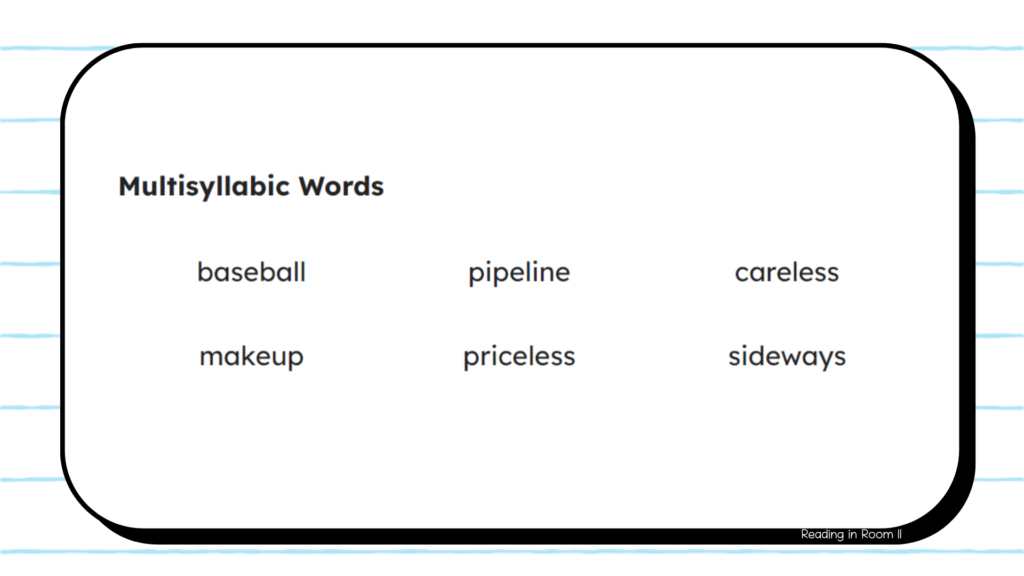
- This is a controlled setting to practice breaking apart multisyllabic words into smaller parts
- Students use their knowledge of the sound-spellings to break the word apart
- Helps students build confidence while practicing word attack/decoding skills, and fluency in reading.
Teacher Tips
- Encourage students to find the target spelling in the word
- This will help them identify smaller word parts
- Follow whisper reading procedures
Video Walkthrough
DICTATION
Why It’s Important
- Dictation exercises provide valuable practice in encoding words with the target phonetic patterns.
- When students write words it strengthens their spelling skills and reinforces phonetic understanding.
Teacher Tips
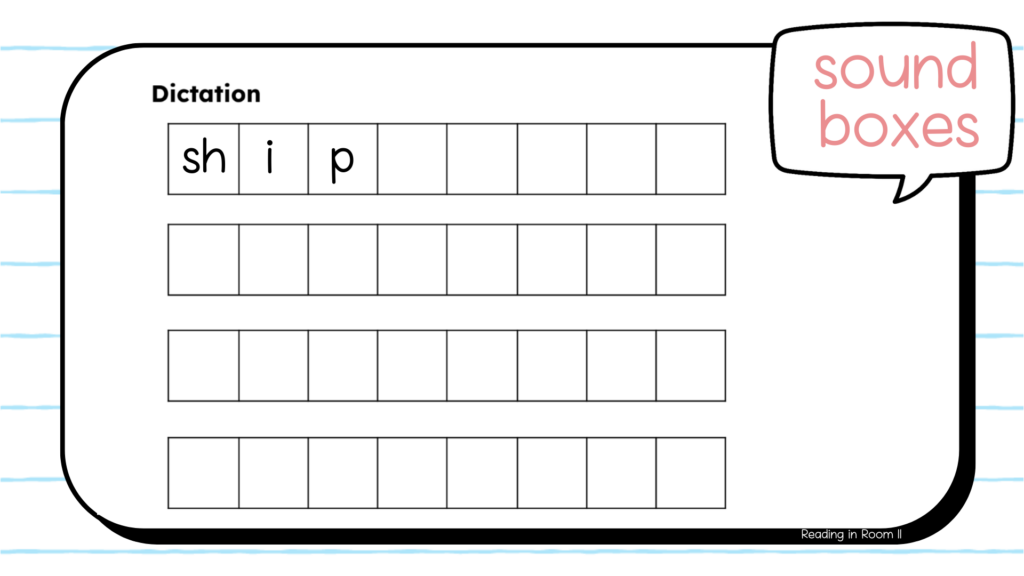
- Dictation lessons include sound boxes.
- When students write a word each sound (not a letter) goes in one box
- For example, vowel teams, vowel digraph,s and trigraphs would go in one box even though they are multiple letters, they only make one sound
Video Walkthrough
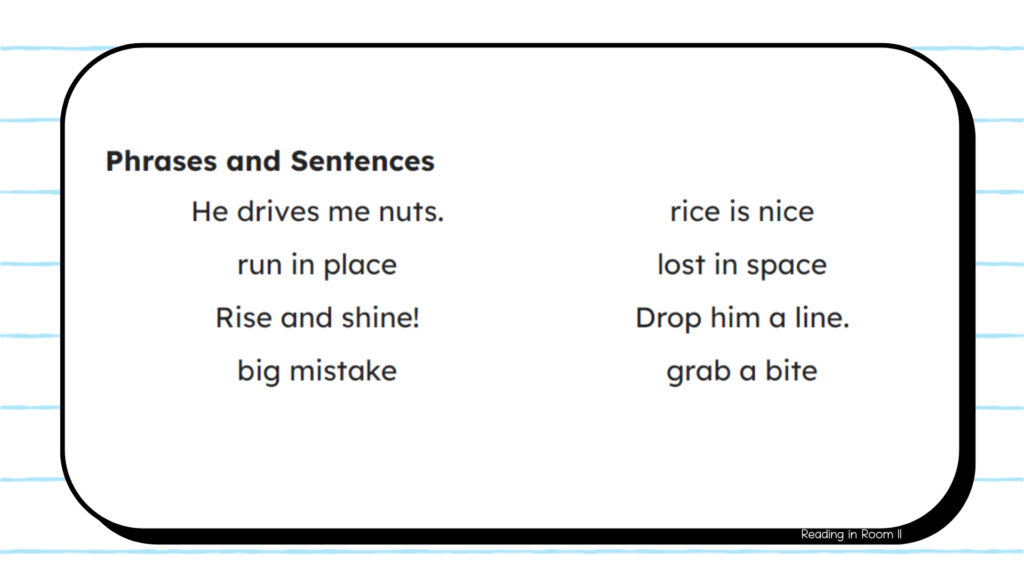
PHRASES & SENTENCES
Why It’s Important
- This is a very important bridge or scaffold between reading words in isolation and passage reading
- Phrases allow students to build fluency in smaller chunks
- Phrases and sentences can be less overwhelming to struggling readers
- Sentences and phrases are taken from the passage that students will read in the next section
Teacher Tips
- Follow whisper reading procedures
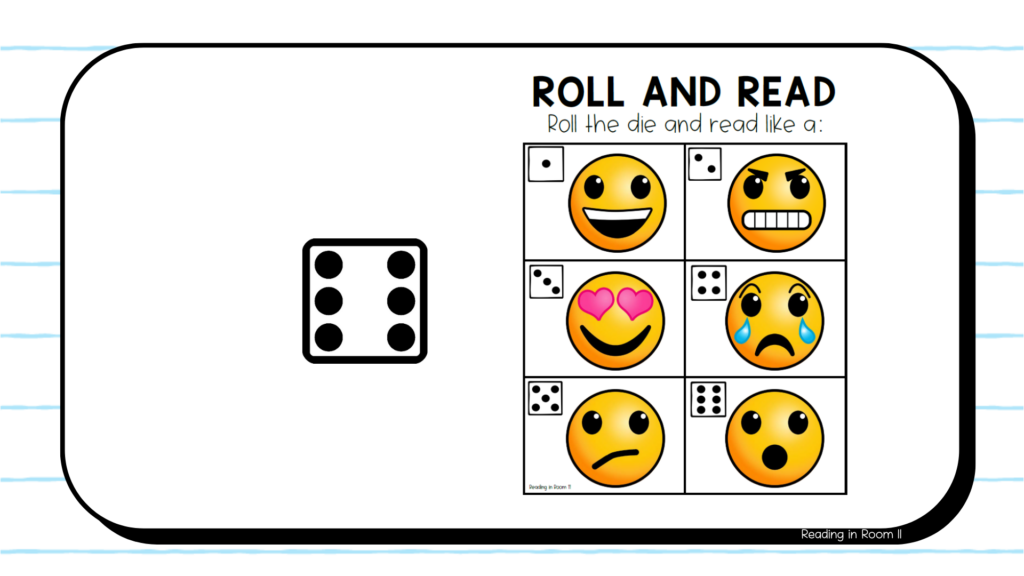
- This is another section where a game can be included to change up the routine.
- With fluency voices, students roll a dice and depending on the picture, use that voice to read the phrase or sentence
Video Walkthrough
DECODABLE PASSAGE
Why It’s Important
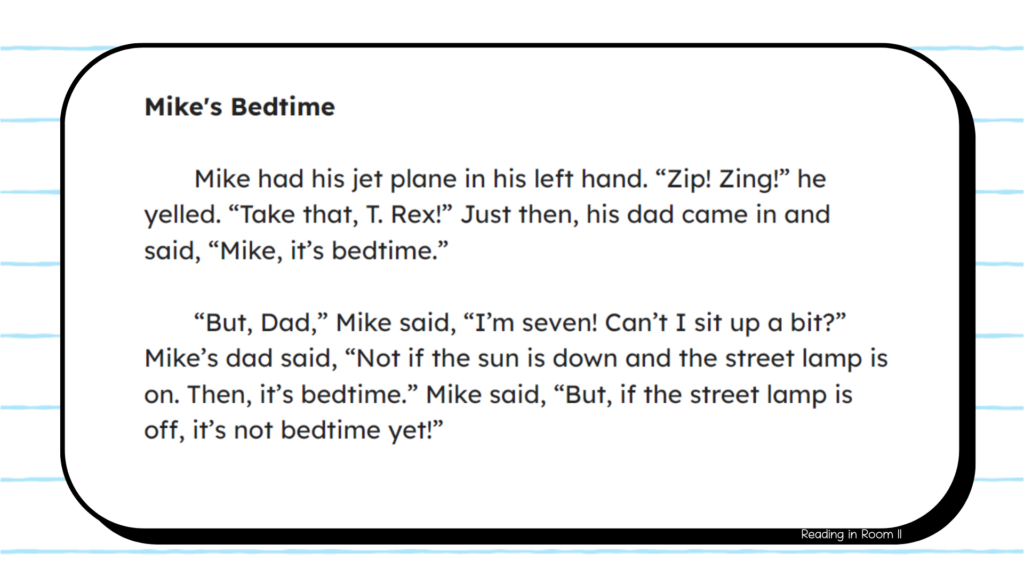
- This is what we have been working up to – passage reading!
- Each section of the lesson has provided a scaffold for students to be able to read a passage
Teacher Tips
- Follow whisper reading procedures
- I sometimes highlight a sentence, a couple sentences, or a paragraph for students to focus on
- Once everyone has practiced their part, we read the story aloud
Video Walkthrough
COMPREHENSION QUESTION
Why It’s Important
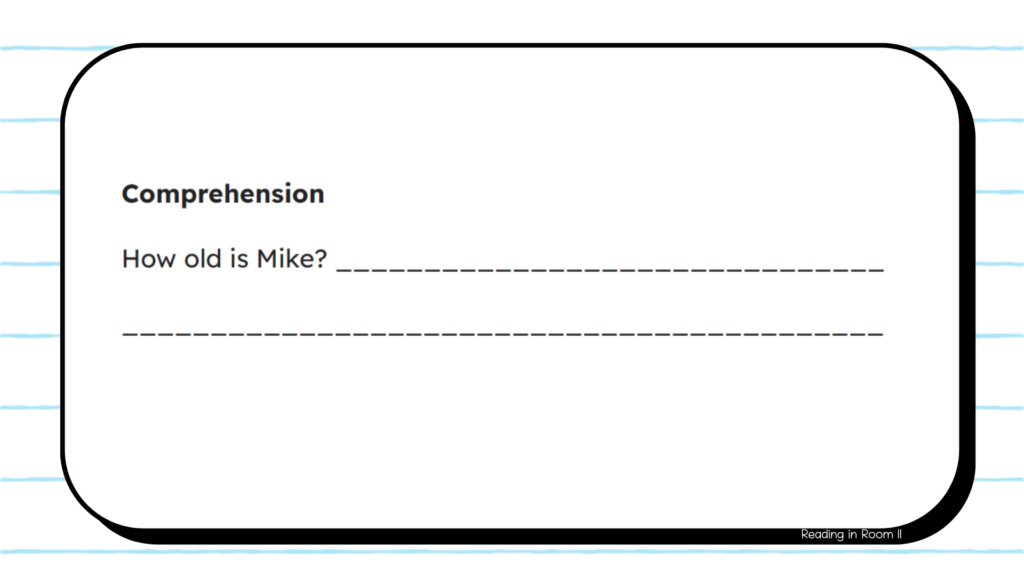
- Students demonstrate their understanding of the passage content by answering comprehension questions.
- This task encourages critical thinking and reinforces comprehension skills.
Teacher Tips
- Encourage students to underline the answer in the text
- Encourage students to use words from the question in their answer to make a complete sentence
- Remind students to write a complete sentence using proper spelling, capitalization, grammar, and mechanics.
Video Walkthrough
Thank you!
I hope that you find this guide to be helpful! If you have any questions please email me.