Skip to content
  • Home
  • About
  • Blog
  • Shop
  • Home
  • About
  • Blog
  • Shop
Instruction and Interventions

How to Teach Blending and Segmenting: The Building Blocks of Reading

How to Teach Blending and Segmenting: The Building Blocks of Reading

Blending and segmenting are essential components of phonological awareness.  To become proficient readers, it is critical that students can blend and segment words automatically.  Here are some ways that I help my students learn to blend and segment (freebies included).

Mastering blending and segmenting is crucial for strong reading skills. Explore free activities to teach these skills in an engaging way. Learn the basics of blending and segmenting, try Google Slides, use manipulatives, and practice oral blending/segmentation. Access resources like word lists, Guess My Word, and Self Checking Poke Cards. Pin this post for easy reference and empower your students' phonological awareness and reading success.

What is Blending and Segmenting?

But first, let’s make sure we’re on the same page about what blending and segmenting actually mean. Blending is when a student hears individual sounds and combines them to create a word. For example, the sounds /c/ – /a/ – /t/ would be blended to form the word “cat.”

On the other hand, segmenting is the process of breaking down a word into its individual sounds. So, if we take the word “cat,” we would say /c/ – /a/ – /t/.

Now, let’s dive into some activities that you can try with your students!

How to Teach Blending and Segmenting

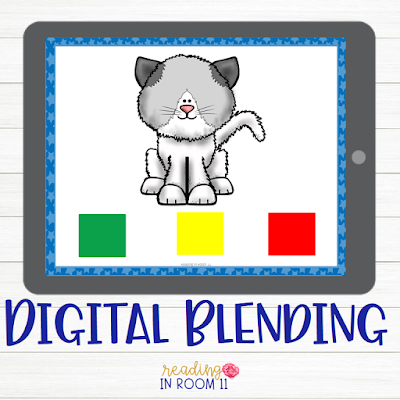
Here are two examples of the process I use to introduce blending and segmenting with Google Slides:

Mastering blending and segmenting is crucial for strong reading skills. Explore free activities to teach these skills in an engaging way. Learn the basics of blending and segmenting, try Google Slides, use manipulatives, and practice oral blending/segmentation. Access resources like word lists, Guess My Word, and Self Checking Poke Cards. Pin this post for easy reference and empower your students' phonological awareness and reading success.

BLENDING:

  • show the pictures /of rain/ and /bow/ 
  • say each word 
  • have the students repeat each word
  • Model (then eventually ask) what the word is
  • Students will say rainbow 

SEGMENTING:

  • show the picture /rainbow/ 
  • say the word
  • have students repeat the word
  • Model (then eventually ask) what the two parts are /rain/ /bow/
  • Students will say /rain/ /bow/ 

Here are two quick videos showing the process:

Using Manipulatives to Teach Blending and Segmenting

Once your students are comfortable with the visual models, you can incorporate manipulatives into the blending and segmenting activities. I find colored cubes to be a great option. Follow the same steps as before, but have the students touch the cubes as they say the word this time.

Mastering blending and segmenting is crucial for strong reading skills. Explore free activities to teach these skills in an engaging way. Learn the basics of blending and segmenting, try Google Slides, use manipulatives, and practice oral blending/segmentation. Access resources like word lists, Guess My Word, and Self Checking Poke Cards. Pin this post for easy reference and empower your students' phonological awareness and reading success.

You can find a list of compound words to use for this activity by clicking HERE.

Oral Blending/Segmentation

Visual models for blending and segmenting compound words helped students understand the concept.  Using manipulatives allowed them to practice with some support.  Now it is time for students to show what they know and blend and segment orally!  You can use the list of compound words provided above.

Simply say the two words for blending, and students will tell you the compound word.  Say the compound word for blending, and students will tell you the two words!

What’s Next?

Once your students have mastered blending and segmenting syllables in compound words, you can progress to working with individual sounds or phonemes. You can use the same three-step process to introduce blending and segmenting of words with two sounds, then three sounds, and so on. Here are some word lists to get you started.

Mastering blending and segmenting is crucial for strong reading skills. Explore free activities to teach these skills in an engaging way. Learn the basics of blending and segmenting, try Google Slides, use manipulatives, and practice oral blending/segmentation. Access resources like word lists, Guess My Word, and Self Checking Poke Cards. Pin this post for easy reference and empower your students' phonological awareness and reading success.

Additional Resources

Google Slides Freebie: If you need a copy of the free Google Slides resources for blending and segmenting, you can grab them HERE.

Mastering blending and segmenting is crucial for strong reading skills. Explore free activities to teach these skills in an engaging way. Learn the basics of blending and segmenting, try Google Slides, use manipulatives, and practice oral blending/segmentation. Access resources like word lists, Guess My Word, and Self Checking Poke Cards. Pin this post for easy reference and empower your students' phonological awareness and reading success.

Word Lists: I’ve provided three different word lists (all free) that you can use for these activities. They are categorized based on the number of sounds in the words (2, 3, and 4 sounds).

Guess My Word: Guess My Word is a fun and engaging activity that can be used to practice blending and segmenting words with 2, 3, and 4 sounds in a whole or small group setting.

Mastering blending and segmenting is crucial for strong reading skills. Explore free activities to teach these skills in an engaging way. Learn the basics of blending and segmenting, try Google Slides, use manipulatives, and practice oral blending/segmentation. Access resources like word lists, Guess My Word, and Self Checking Poke Cards. Pin this post for easy reference and empower your students' phonological awareness and reading success.

Self-Checking Poke Cards: Poke cards are independent and self-checking activities that allow students to practice specific skills. The “How Many Syllables” set focuses on segmenting syllables, while “How Many Sounds” focuses on segmenting sounds in words.

Mastering blending and segmenting is crucial for strong reading skills. Explore free activities to teach these skills in an engaging way. Learn the basics of blending and segmenting, try Google Slides, use manipulatives, and practice oral blending/segmentation. Access resources like word lists, Guess My Word, and Self Checking Poke Cards. Pin this post for easy reference and empower your students' phonological awareness and reading success.

More Digital Resources

Mastering blending and segmenting is crucial for strong reading skills. Explore free activities to teach these skills in an engaging way. Learn the basics of blending and segmenting, try Google Slides, use manipulatives, and practice oral blending/segmentation. Access resources like word lists, Guess My Word, and Self Checking Poke Cards. Pin this post for easy reference and empower your students' phonological awareness and reading success.

Final Thoughts on Teaching Blending and Segmenting

Remember, teaching blending and segmenting is an important step in helping our students become proficient readers. By providing them with engaging activities and resources, we can support their phonological awareness development and set them on the path to reading success.

Pin for Later

Mastering blending and segmenting is crucial for strong reading skills. Explore free activities to teach these skills in an engaging way. Learn the basics of blending and segmenting, try Google Slides, use manipulatives, and practice oral blending/segmentation. Access resources like word lists, Guess My Word, and Self Checking Poke Cards. Pin this post for easy reference and empower your students' phonological awareness and reading success.

SHARE THIS
freebiephonological awareness
About Jenn

About Jenn

Hi! I'm Jenn and I'm here to help teachers who want to deliver systematic, explicit reading instruction/interventions by sharing what I've learned about the Science of Reading and the resources I use daily with my students.

Related Posts

Phonemic Awareness Interventions: The Key to Decoding Greatness
What is Phonemic Awareness? A Comprehensive Guide with Examples
Anecdotal Notes For Reading Groups: From Observation to Transformation
Sound Spellings: A Powerful Tool for Teaching Reading

Post navigation

Science of Reading Professional Development: Free and You Don’t Have to Leave Your Couch!
How to Use Self-Checking Poke Cards to Engage and Empower Your Students
About Me

About Me

Hi! I'm Jenn and I’m a K-4 Reading Specialist here to help teachers who want to deliver systematic, explicit reading instruction and interventions by sharing what I’ve learned about the Science of Reading and the resources I use daily with my students.

FREEBIES

ckla-flashcard-freebie
unlock-the-power-of-punchcards-with-free-go-noodle-punch-cards-1
free ckla code charts
a guide to finding free decodable text
CKLA-Sound-Cards-1
previous arrow
next arrow

Subscribe

and get tips and tricks on reading instruction and intervention sent straight to your inbox!

Teachers LOVE:

empowering teachers. transforming students (3)
ckla intervention lessons
empowering teachers. transforming students (2)
Guess my word (1)
empowering teachers. transforming students (1)
empowering teachers. transforming students
previous arrow
next arrow

SHOP NOW

LEARN ABOUT

CKLA engagement freebie game management organization phonemic awareness phonics phonological awareness syllable types tech tip

  • Home
  • About
  • Blog
  • Shop
Copyright © 2026 | All Rights Reserved | Designed by Little Theme Shop